 Jonathan Franklin
Problem
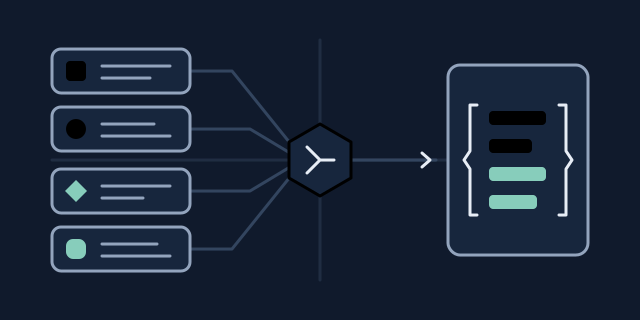
A website, browser extension and external clients needed product results from Pricesearcher’s own index plus Amazon, Yahoo and Kelkoo. Different formats, provider latency and client-specific ranking made a single synchronous, one-size-fits-all response a poor fit.
Constraints
Third-party providers could fail independently of the internal Elasticsearch index. Some result sets were large; clients needed different relevance ordering and search facets. Existing price-lookup and legacy routes could not simply disappear while the API was split into clearer interfaces.
Solution
The Python/Flask API combined Elasticsearch with asynchronous third-party integrations, handling provider failures separately. A result-handler layer ordered results by client; streaming supported larger responses. Redis with RediSearch filtered, sorted and faceted cached results. Web, extension, external-client and core APIs had separate deployments and OpenAPI specifications, with shared legacy routes retained where needed.
My Role
I added the multi-source products endpoint and provider integrations, streaming responses and client-specific result handling. I worked on splitting the monolith into client-specific deployments and specifications, and maintained price-lookup APIs, query expansion, Docker images, Terraform and Jenkins deployment tooling.
Technologies
Python, Flask, Elasticsearch, Redis/RediSearch, OpenAPI, Docker, Terraform.
Engineering Challenges
- Latency and partial failure: Parallel provider requests and separate failure handling avoided coupling the entire response to one external source’s behaviour.
- Ranking is client-specific: A result-handler layer made the ordering decision explicit rather than baking a single relevance policy into every provider adapter.
- Split the boundary without breaking consumers: Distinct deployments and specifications clarified ownership, while retaining shared legacy routes during the transition. Redis-backed facets let clients explore cached results without repeating Elasticsearch queries.
Outcome
The API served combined internal and third-party products with client-specific ordering, cached filtering and clearer interface boundaries. No latency or availability improvement is claimed without measurements.